How Much Solar Does Your Home Need? A Simple Solar Energy Estimator
November 17, 2026
How much solar does your home need? A typical American house needs about 15 to 19 panels, or roughly 6 to 7.6 kilowatts (kW, units of 1,000 watts) with 400-watt panels. Your own number depends on how much power you use, how much sun your roof gets, and how strong each panel is.
This guide works like a solar energy estimator you can run on paper. Grab your electric bill, follow three short steps, and you will have a panel count to take to any installer. You will also see the catches that most guides skip.
The short answer: divide your monthly kWh by your monthly peak sun hours, then divide by one panel's output in kW. A home using about 900 kWh a month needs roughly 17 panels rated at 400 watts, or about 21 once you allow for real-world losses. Then check your roof's age, shade and your utility's rules before you settle on a size.
How Much Solar Does Your Home Need Each Month?
A home that uses 900 kilowatt-hours (kWh) a month needs about 17 solar panels rated at 400 watts. A kWh is the unit your utility bills you in, and 900 is close to the national average. Here is how other usage levels line up:
- 600 kWh a month: about 4.4 kW, or 11 panels, using about 195 sq ft of roof
- 900 kWh a month: about 6.6 kW, or 17 panels, using about 300 sq ft of roof
- 1,200 kWh a month: about 8.8 kW, or 22 panels, using about 390 sq ft of roof
- 1,500 kWh a month: about 11 kW, or 28 panels, using about 495 sq ft of roof
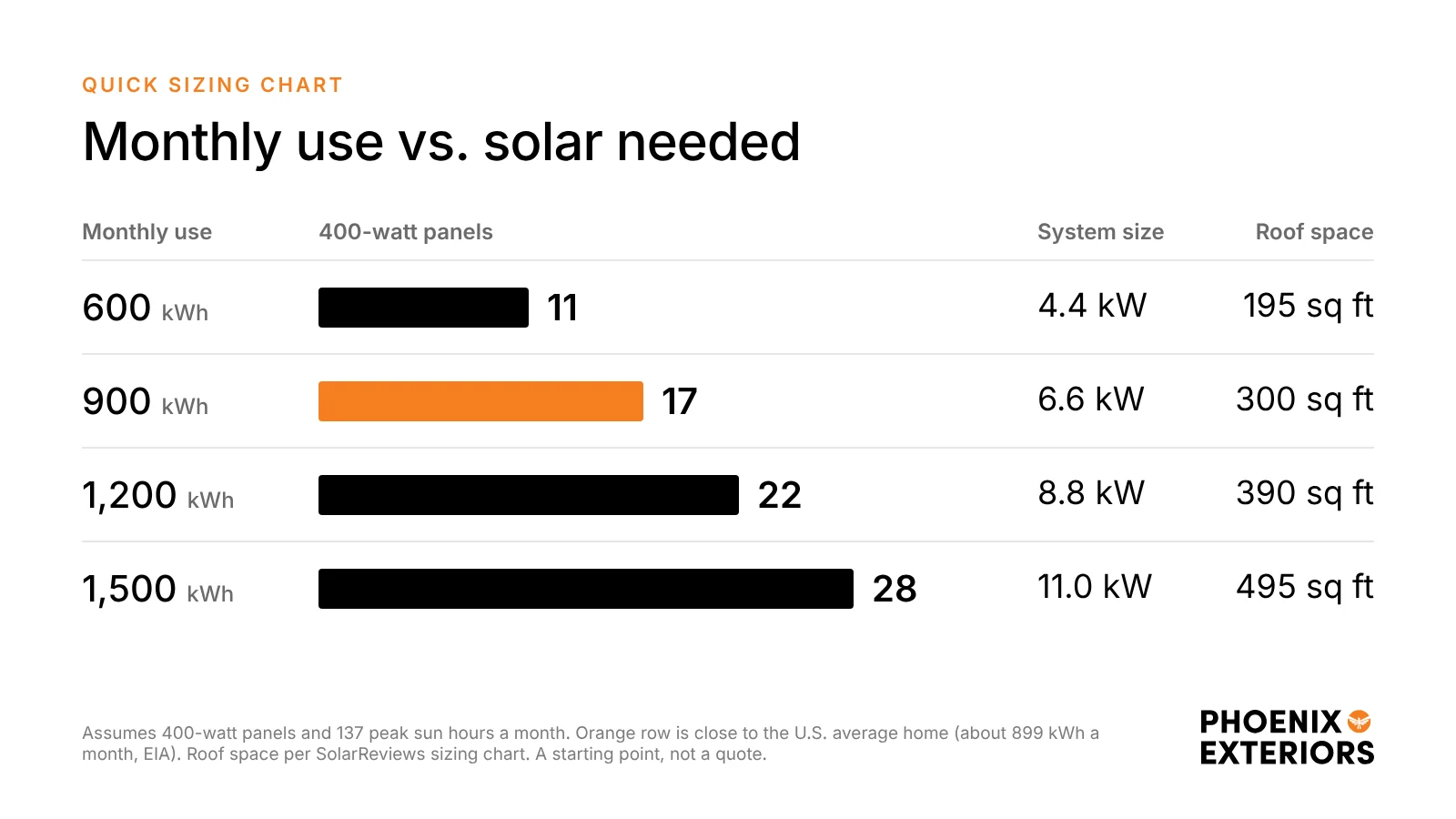
These figures use 400-watt panels and a typical 137 peak sun hours a month, a term Step 2 explains. Roof space follows the SolarReviews sizing chart, about 177 square feet for ten panels. Treat these numbers as a starting point, not a quote.
Step 1: Find Out How Much Electricity You Use
How much solar you need starts with how much power you use, and your electric bill already lists it in kWh. The University of Illinois Extension suggests averaging 12 to 24 months of bills, since summer cooling and winter heating swing the totals. That gives you a fair monthly figure instead of one lucky or unlucky bill.
For a rough comparison, the U.S. Energy Information Administration (EIA) reports that the average home bought 10,791 kWh in 2022, about 899 kWh a month. Your own use may sit well above or below that, depending on home size, heating fuel and how many people live there.
Plan for what you will add later
Planning an electric car, a pool or electric heat? SolarReviews lists these as common reasons to install more panels than you need today. Sizing for next year's bill, not just last year's, keeps the system from falling short.
Trim the waste first
A smaller bill means less solar to buy, so how much solar you need drops too. The Extension also asks homeowners to look at efficiency upgrades before going solar. Every kWh you save is solar you do not have to buy.
Step 2: Use the Solar Energy Estimator Formula
Divide your monthly kWh by your monthly peak sun hours, then divide again by one panel's output in kilowatts. SolarReviews uses the same formula for its sizing guide. Here is what each piece means.
Peak sun hours: how much usable sun you get
A peak sun hour is one hour of full-strength sunshine, which is not the same as daylight hours. A long, hazy day may give you only a few. According to SolarReviews, Midwestern states average 122 to 152 peak sun hours a month, while the Southwest gets 198 to 228.
Panel wattage: how much power each panel makes
Watts measure how much power one panel can make at its best. An average 400-watt panel produces about 2 kWh a day, and stronger panels mean fewer of them on your roof. In the same guide, an average home needs 26 panels at 250 watts but only 15 at 450 watts.
A worked example for the average home
Take a home that uses 899 kWh a month, with 137 peak sun hours and 400-watt panels (0.4 kW each). The math runs like this:
- 899 kWh divided by 137 peak sun hours gives about 6.6 kW of solar.
- 6.6 kW divided by 0.4 kW per panel gives about 16.4, so you round up to 17 panels.
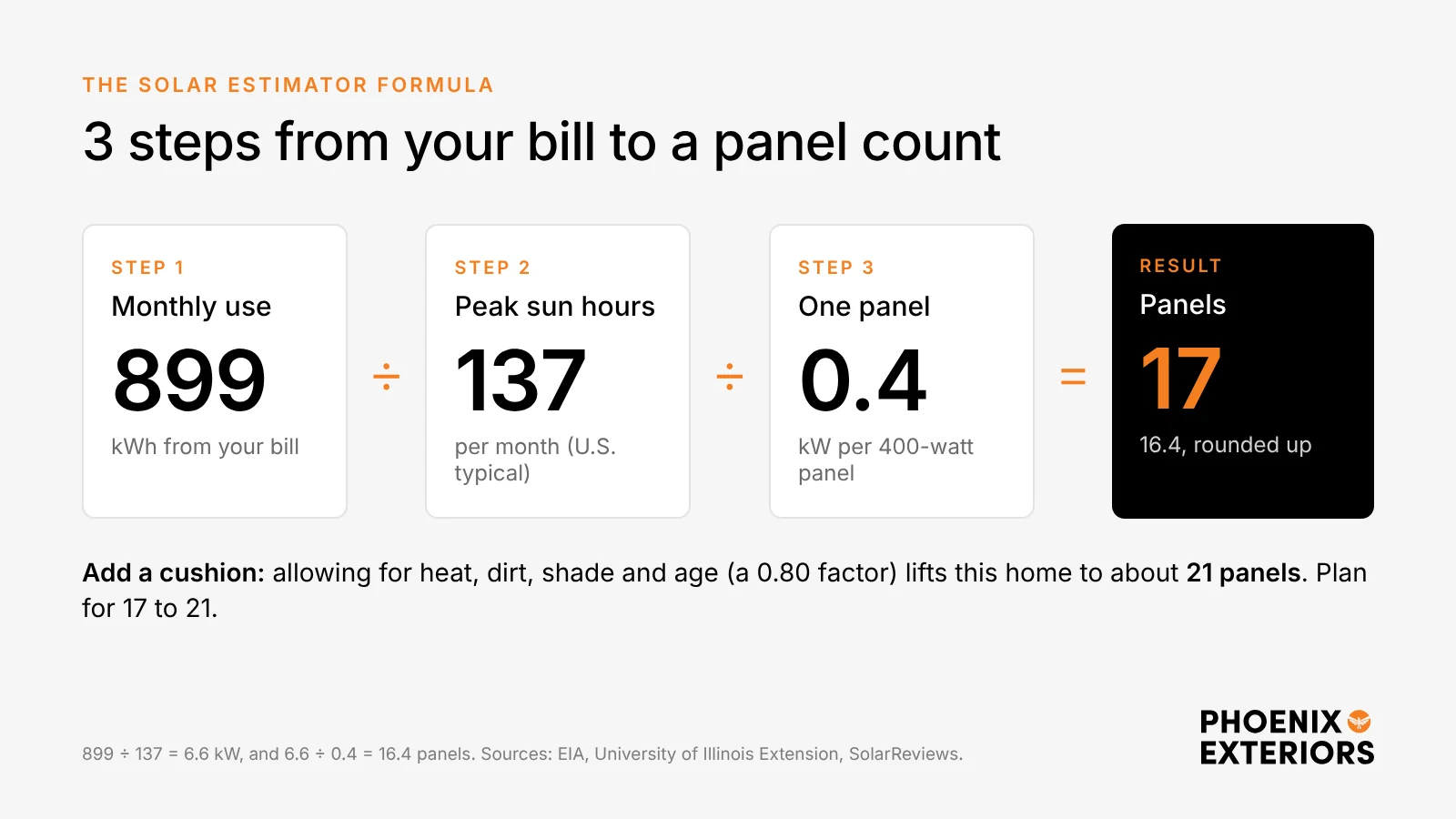
Real systems lose some output to heat, dirt, shade and age. The Extension builds in a 0.80 efficiency factor to cover that, which lifts this home to about 8.2 kW, or 21 panels. A smart planning range for this home is 17 to 21 panels.
Let a free tool check your math
The PVWatts Calculator, a free tool from the Department of Energy's National Laboratory of the Rockies (formerly NREL), estimates what a grid-connected system would produce at your address. The Extension also points to it for checking whether a system will fit on your roof. You can also try our solar estimate tool. Use either as a first pass, since an installer's design will be more detailed.
What Changes How Much Solar Your Home Needs
Four things change how much solar you need: your roof, shade, your utility's rules, and how much of your bill you want to cover.
- Roof direction and tilt. A south-facing roof makes the most power in the United States, and a tilt of about 30 degrees is best for most of the country, according to the Department of Energy's Pacific Northwest National Laboratory. Other directions still work, but you may need a few extra panels to make the same amount of power.
- Roof space and shade. Ten 400-watt panels need about 177 square feet, and a 7.6 kW system covers about 334 square feet, roughly 20% of an average roof. Vents, chimneys, skylights and shade can take some of that space away. If your best roof section is small, higher-wattage panels can help you reach the same kW in less room.
- Your utility's rules. Your utility decides how it pays you for extra power, and many limit installs to about 120% of your yearly use. Under net metering, the utility gives you bill credits for extra power you send to the grid, though some pay less than full value.
- How much of your bill to cover. Most homeowners aim to cover all of their electricity use, according to SolarReviews. A grid-tied system, which stays connected to the utility, does not have to. The Extension suggests 50% to 75% as a place to start, since use changes by season and time of day.
If you want power at night or during an outage, a solar battery changes the math. Off-grid homes, which have no utility connection at all, need both enough panels and batteries to run the house after sundown.
What Most Guides Miss: Your Roof and Your Panels Should Age Together
Your panels will sit on your roof for decades, so the roof's age belongs in the sizing talk. The Department of Energy (DOE) says panels last about 25 to 30 years. A roof lasts 20 to 50 years, depending on its materials.
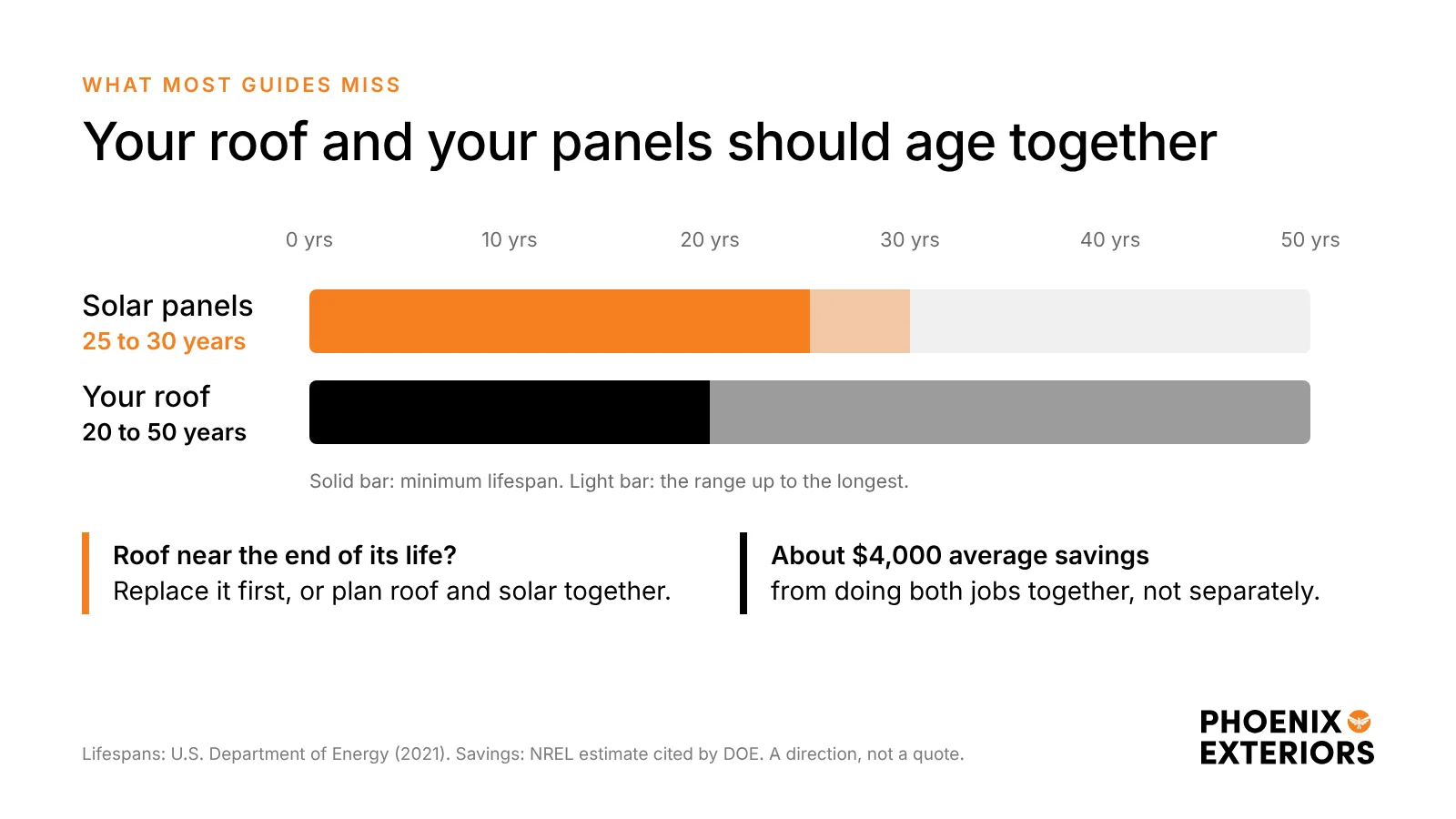
If your roof is near the end of its life, you may pay to take the panels off and put them back. Doing both jobs together avoids having the panels reinstalled. A 2021 DOE article cites an NREL estimate of about $4,000 in average savings, so treat that as a direction, not a quote.
Before you settle how much solar to buy, ask how many years your roof has left. If the answer is fewer than your panels will run, look at residential roofing first or plan both together. A solar roof is another route, since the roofing itself makes power.
When More Solar Is Not Worth It
Buying more solar than your usage rarely pays, because extra power is often capped or credited at a lower rate. Three more things are worth weighing:
- Every extra kW costs real money. SolarReviews puts installed cost near $3.03 per watt, and a 2023 benchmark from the University of Illinois Extension says $3.16 per watt. That is roughly $3,000 to $3,200 for every extra kW, and neither figure is a quote.
- The federal credit is gone. The 30% federal residential solar tax credit is not available for systems installed after December 31, 2025, according to the IRS. That means the credit no longer softens the cost of extra panels. Our solar tax credit guide has more on what changed.
- Estimators have blind spots. A calculator cannot see the tree on your neighbor's lot or the vent stack on your roof. If shade or space is tight, a smaller system on your best roof section can beat a bigger one that underperforms.
Frequently Asked Questions
How many solar panels do I need for a 2,000 square foot house?
About 15 to 16 panels rated at 400 watts, based on the SolarReviews sizing charts. Square footage is only a rough guide. Two homes of the same size can use very different amounts of power, so your own kWh use beats the floor plan.
Can solar panels run an entire house?
Yes, but usually together with the grid. As SolarReviews explains, your panels power the house by day, and credits for extra power cover your nights. To run the house with no utility at all, you need enough panels plus batteries sized for the evening.
How many solar panels do I need for 1,000 kWh a month?
Roughly 17 to 19 panels of 400 watts. SolarReviews lists 17, and the formula in this guide gives 19 at 137 peak sun hours a month. Add a few more if your roof faces east or west, or if shade cuts into your sun.
Can I install more solar panels than I need?
Sometimes, but your utility may limit it. Most utilities allow systems up to about 120% of your yearly use, and some give less than full credit for extra power. An electric car is a good reason to size up, within your utility's cap.
How much roof space do solar panels need?
Ten 400-watt panels, a 4 kW system, need about 177 square feet. A 7.6 kW system covers about 334 square feet, roughly 20% of an average roof. Vents, chimneys, skylights and shade shrink what you can use, so check your roof layout before settling on a size.
Get a Solar Design Built Around Your Roof
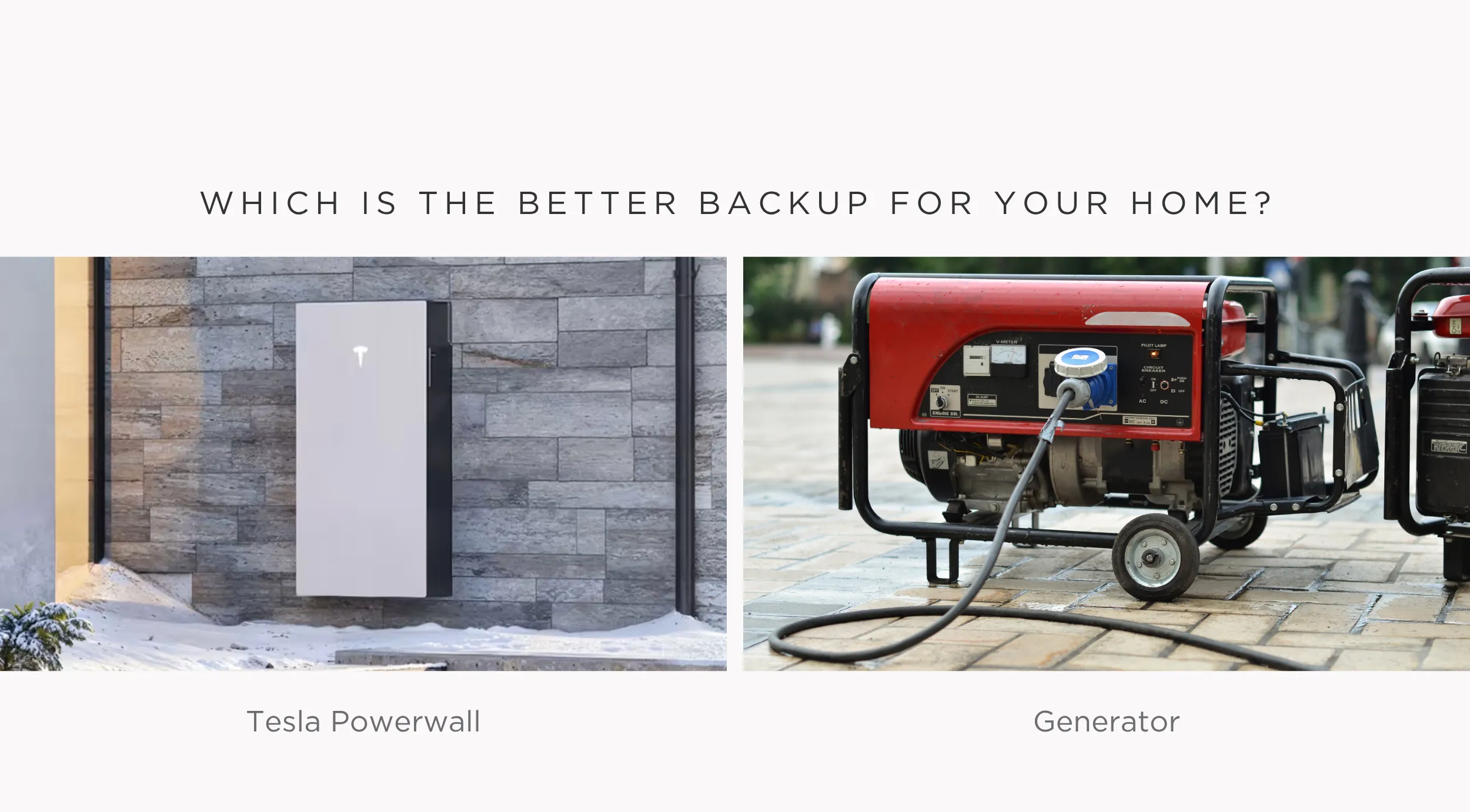
An online estimate is a good start, but a roof-by-roof design is what tells you the right size. Phoenix Exteriors sizes solar panel systems to your roof and your bills, and checks whether your roof should be replaced first. Learn more about home battery backup or get a free estimate.


Get a Free Roofing Inspection
$0 down and flexible terms, subject to credit approval
Discover the Phoenix Difference
Phoenix Exteriors is dedicated to creating a brighter future by combining roofing and solar expertise with a commitment to sustainability, delivering exceptional service while reducing our environmental footprint.